



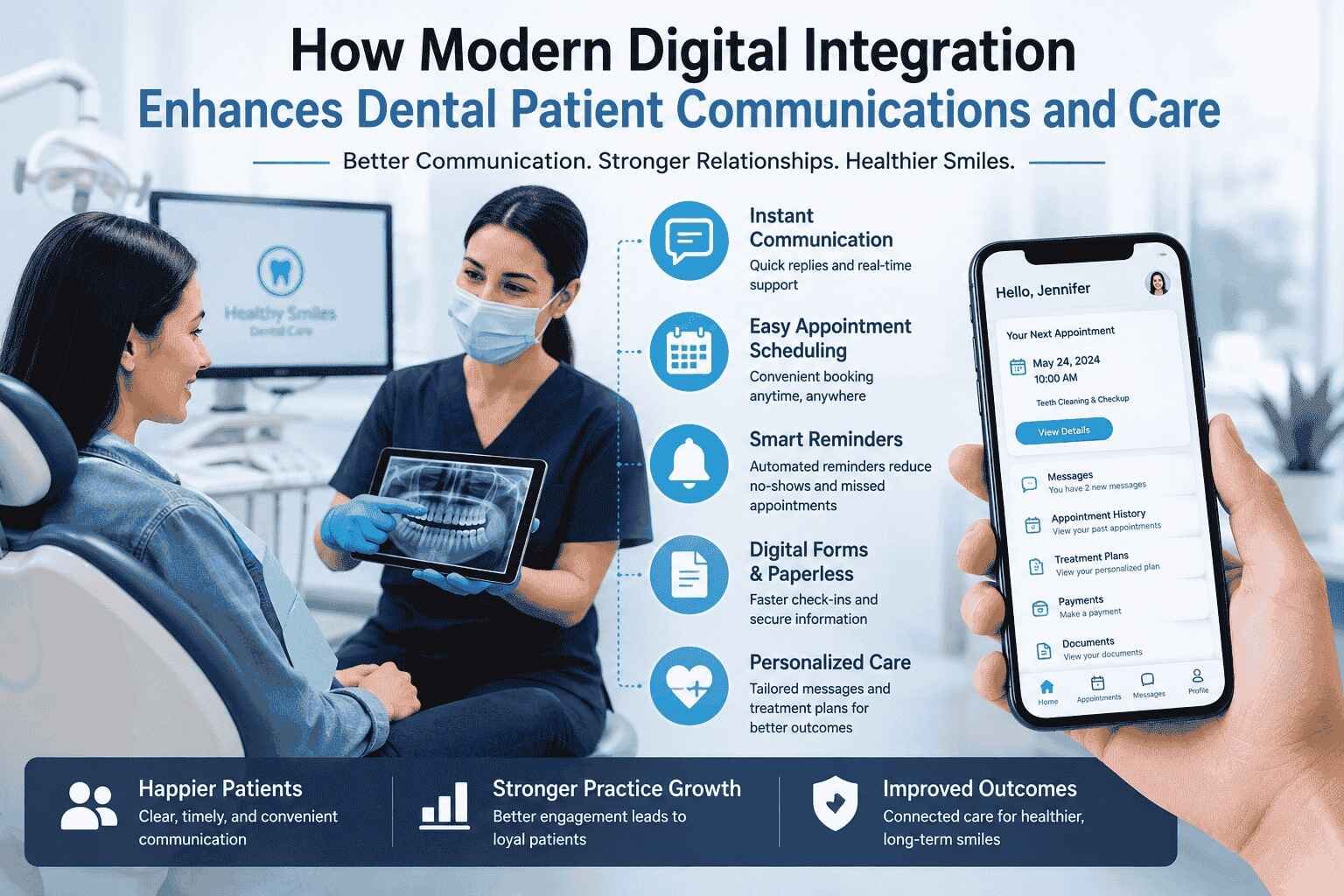
For decades, sitting in a dental chair felt like a black box experience where you sat back, trusted the dentist’s brief verbal description, and hoped the final result matched what you had envisioned. Today, a quiet revolution in dental technology has fundamentally changed how patients experience oral healthcare. Modern care relies on an interconnected network of 3D digital imaging, intraoral scanning, and interactive visualization tools that bring complete clarity to every step of your treatment.
Investing in Cosmetic Dentistry is no longer a leap of faith into the unknown, but a precise, digitally guided transformation. Advanced clinical software maps out every millimeter of tooth movement and aesthetic alignment before any procedure takes place.
Instead of trying to visualize complex procedures from a quick mirror glance, patients can now see high-definition 3D models of their teeth from every angle in real time. This shift from passive treatment to visual collaboration removes anxiety, replaces guesswork with hard data, and gives individuals true ownership over their health choices.
Digital workflows prioritize both immediate comfort and long-term restorative precision across every phase of diagnosis and treatment planning.
The Diagnostic Shift: 3D Imaging and Digital Radiography
Traditional two-dimensional dental X-rays provided essential structural views, but they often obscured subtle tissue depth, nerve pathways, and localized bone density variations. Modern digital diagnostic architecture overcomes these limitations through advanced 3D imaging technology.
- Cone Beam Computed Tomography (CBCT): CBCT scans generate three-dimensional cross-sectional views of the jawbone, facial nerves, and sinus cavities. Visiting a fully equipped Dental Clinic that utilizes this level of detail is indispensable for planning precise dental implant placements and complex endodontic treatments.
- Digital Intraoral Scanners: Replacing messy physical impression trays, optical intraoral scanners create highly accurate 3D digital renders of the arch within minutes, enhancing patient comfort and eliminating distortion errors.
- Low Radiation Digital X-Rays: Digital sensor technology reduces radiation exposure by up to 80% compared to traditional film X-rays while producing instant, high-contrast imagery for immediate clinical evaluation.
Precision Treatment Planning in Restorative and Cosmetic Care
Once 3D digital models are generated, specialized computer-aided design and computer-aided manufacturing (CAD/CAM) software allows dental teams to design custom restorations with microscopic accuracy. This integrated digital pipeline dramatically reduces turnaround times for crowns, veneers, inlays, and surgical guides. By simulating the outcome digitally, clinicians can evaluate bite alignment, contact points, and facial aesthetics alongside the patient, ensuring predictable results before any physical restoration is fabricated.
| Clinical Procedure | Legacy Manual Workflow | Integrated Digital Workflow |
| Arch Impressions | Physical alginate or silicone trays | Fast optical intraoral scanning |
| Crown Fabrication | Off-site lab work taking 1 to 2 weeks | Precise CAD/CAM milling in reduced timeframes |
| Implant Placement | Freehand placement guided by 2D X-rays | 3D CBCT guided surgical templates |
| Patient Education | Handheld mirror and verbal explanation | High-definition chairside monitor visualization |
Enhancing Patient Understanding and Informed Consent
One of the greatest advantages of digital dentistry is its ability to bridge the communication gap between clinicians and patients. Dental conditions like early-stage interproximal decay or microcracks are often asymptomatic and invisible to the naked eye. When patients can see hhigh-magnificationintraoral photographs and 3D renderings of their own tooth structures on screen, they gain a clear, objective understanding of why specific therapeutic interventions are recommended.
Furthermore, digital treatment simulations allow patients to preview aesthetic outcomes, such as clear aligner progression or smile design enhancements, before committing to treatment. This visual transparency builds trust, alleviates dental anxiety, and empowers individuals to take an active role in their personal oral health journey.
Long-Term Health Preservation Through Automated Tracking
Digital record management allows dental practices to monitor subtle structural changes over extended periods. Software algorithms can overlay historical intraoral scans with current images to track enamel wear rates, gum recession, and tooth movement over time. This longitudinal data tracking enables proactive preventive care, preventing minor structural wear from escalating into severe restorative issues down the road.
Conclusion
Digital integration has fundamentally transformed modern dentistry, uniting diagnostic accuracy, treatment efficiency, and clear patient communication into a single streamlined standard of care. By replacing subjective assessments with 3D diagnostic imaging, optical intraoral scans, and interactive treatment planning, patients receive safer, faster, and highly predictable dental care. Partnering with experienced dental specialists operating in modern clinical environments remains the surest path toward maintaining a healthy, functional, and confident smile for life.
Frequently Asked Questions (FAQs)
Q1: How do digital 3D scans improve the comfort of dental procedures?
Digital intraoral scanners replace traditional, bulky impression putty trays with a small, comfortable wand that captures thousands of 3D images in seconds without causing gag reflexes.
Q2: Are digital dental X-rays safe for regular check-ups?
Yes. Digital radiography uses electronic sensors instead of film, reducing radiation exposure by up to 80% while delivering instant, clear images for accurate diagnosis.
Q3: How does CAD/CAM technology benefit crown and veneer placement?
CAD/CAM technology enables precise computerized design and automated milling of crowns and veneers, ensuring exact marginal fit, optimal bite alignment, and natural aesthetic integration.