



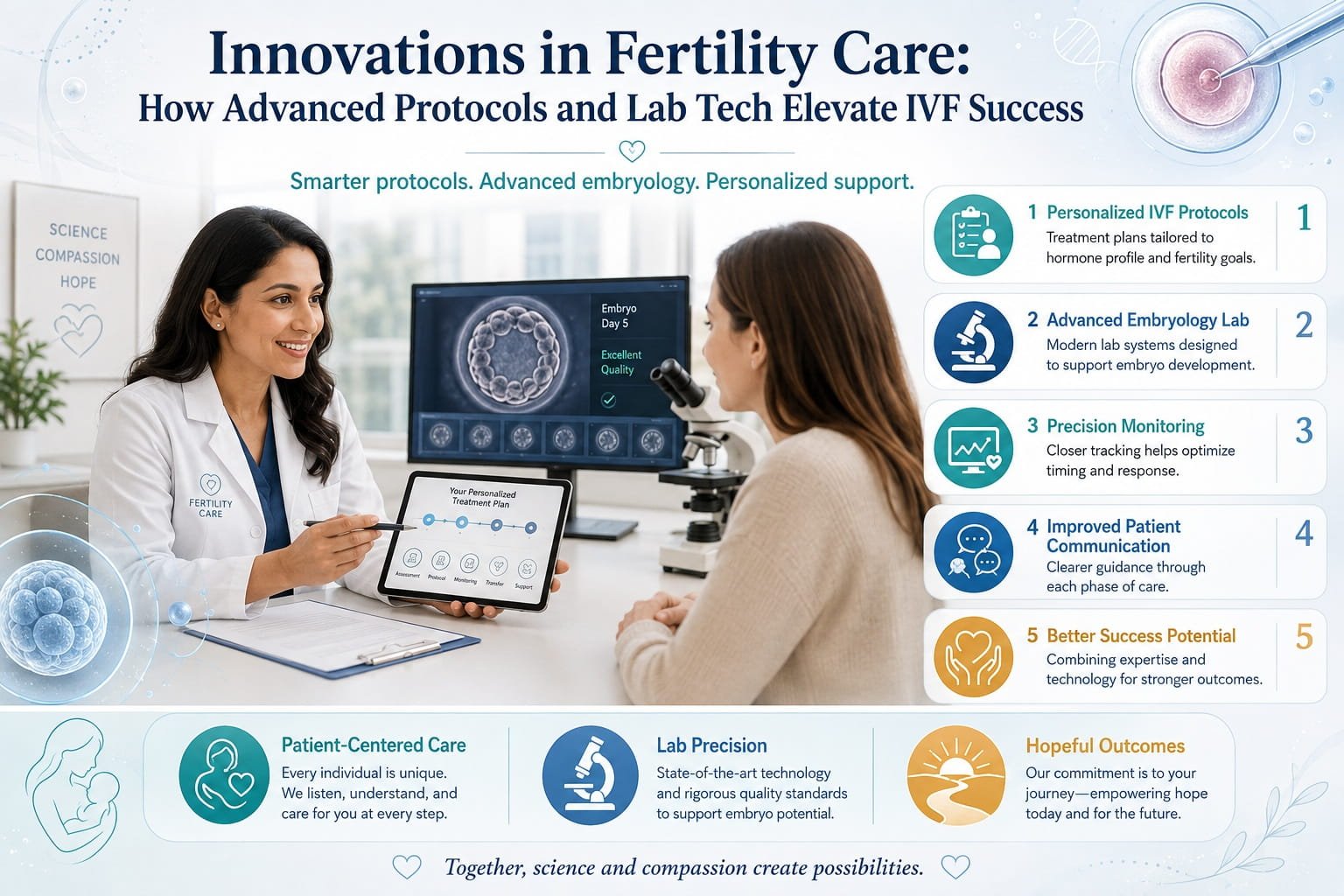
Infertility affects millions of couples worldwide, but advances in reproductive science have transformed assisted reproduction into a highly precise, individualized field of medicine. Historically, fertility care relied on generalized protocols with unpredictable outcomes and standard medication doses. Today, advanced diagnostic evaluations allow clinical teams to pinpoint specific ovulation issues, uterine factor changes, or subtle male fertility parameters before designing a targeted treatment plan.
Consulting a specialized IVF Doctor plays a pivotal role in evaluating these complex biological factors. By analyzing key hormone profiles, antral follicle counts, and genetic markers, fertility specialists can customize medication dosages for ovarian stimulation. This tailored approach optimizes both egg quality and retrieval yield while minimizing risks like ovarian hyperstimulation syndrome.
Targeted clinical mapping ensures that every stage of the treatment cycle aligns with the patient’s biological profile to maximize success.
Diagnostic Milestones in Early Reproductive Assessment
A successful fertility journey begins with comprehensive diagnostic mapping. Identifying the root cause of delay enables medical teams to select the most efficient clinical pathway.
- Ovarian Reserve Testing: Serum Anti-Müllerian Hormone measurements and baseline ultrasound scans help evaluate remaining egg supply and predict ovarian response to stimulation.
- Semen Analysis and Microfluidics: Partnering with an advanced IVF Centre allows couples to access advanced sperm testing that looks beyond count and motility, assessing DNA fragmentation rates and using microfluidic sorting to select healthy sperm cells.
- Uterine Cavity Evaluation: High-resolution 3D ultrasound and hysteroscopy confirm that the uterine lining is receptive and free of polyps, fibroids, or structural adhesions.
Advanced Embryology Laboratory Technologies
While clinical stimulation develops healthy eggs, the embryology laboratory is where fertilization and early biological development occur under tightly controlled environmental conditions.
The care pathway progresses smoothly from ovarian stimulation and egg retrieval to specialized fertilization, embryo culture in time-lapse incubators, genetic screening, and precise transfer into a receptive uterus. Modern laboratory environments maintain strict air quality filtration, precise temperature controls, and optimized gas balances that closely mirror conditions inside the human fallopian tubes and uterus.
When comparing modern care to legacy fertility protocols, older methods relied heavily on manual microscope checks, day three embryo transfers, and basic visual selection. In contrast, current embryology utilizes advanced time lapse imaging to monitor embryo cell division continuously without disturbing their culture environment. Extended blastocyst culture allows embryos to develop to day five or six, yielding higher implantation potential and better clinical outcomes.
Cellular Dynamics and Morphokinetic Evaluation
Time-lapse incubators record thousands of digital images during early embryo division. Computerized algorithms analyze specific morphokinetic milestones, such as the exact timing between cell cleavage events, to rank embryos by their implantation probability.
By keeping culture dishes undisturbed inside controlled multi-room incubators, embryologists eliminate subtle fluctuations in temperature, humidity, and atmospheric oxygen. This steady environment preserves delicate cellular structures, supports robust mitochondrial energy production within embryonic cells, and enhances overall blastocyst formation rates.
Preimplantation Genetic Testing and Embryo Selection
One of the most impactful breakthroughs in assisted reproduction is Preimplantation Genetic Testing. By taking a microscopic biopsy from a day five blastocyst, embryologists can screen for chromosomal abnormalities before transfer.
Transferring chromosomally healthy embryos significantly reduces miscarriage risks, shortens the time to achieve pregnancy, and supports single embryo transfer protocols to prevent high-risk multiple pregnancies.
Personalizing the Embryo Transfer Window
Having a healthy embryo is only half of the equation; placing it into an optimal uterine environment is equally essential. Advanced endometrial receptivity testing helps determine the exact timing for embryo implantation by analyzing gene expression within the uterine lining. Synchronizing embryo development with this individualized window of receptivity maximizes implantation chances for couples facing recurrent transfer failures.
Furthermore, frozen embryo transfers have largely replaced fresh transfers in complex cases. Postponing transfer allows the patient’s endocrine system to return to natural baseline levels after high-dose ovarian stimulation, creating a calmer uterine environment for embryo attachment.
Holistic Wellness and Metabolic Optimization
Optimizing reproductive outcome also involves addressing metabolic health, endocrine function, and stress response before cycle initiation. Clinical teams routinely screen for thyroid dysfunction, insulin resistance, and nutrient deficiencies that impact egg and sperm quality.
Integrating personalized dietary guidelines, antioxidant supplementation, stress management protocols, and lifestyle modifications strengthens gamete development. This holistic integration ensures that biological factors inside and outside the laboratory support sustainable embryonic growth and healthy early pregnancy development.
Conclusion
Achieving a healthy pregnancy through assisted reproduction is now more attainable than ever, thanks to the integration of personalized medicine, advanced embryology labs, and precise genetic screening. By replacing standardized treatments with customized, diagnostic-led care, fertility specialists help couples navigate their family-building journey with confidence. Seeking care from dedicated specialists operating in well-equipped clinical facilities remains the most effective step toward achieving parenthood.
Frequently Asked Questions (FAQs)
Q1: What is the benefit of blastocyst culture on day five compared to day three transfer?
Developing embryos to day five allows embryologists to evaluate their growth stamina, selecting the strongest blastocysts with the highest natural implantation potential.
Q2: How does Preimplantation Genetic Testing help improve success rates?
Genetic testing identifies embryos with correct chromosome numbers, reducing the likelihood of implantation failure, miscarriage, or chromosomal disorders.
Q3: Why is single embryo transfer recommended in modern IVF?
Transferring a single high-quality blastocyst maintains excellent pregnancy rates while avoiding the medical risks associated with twin or multiple pregnancies for both mother and baby.