



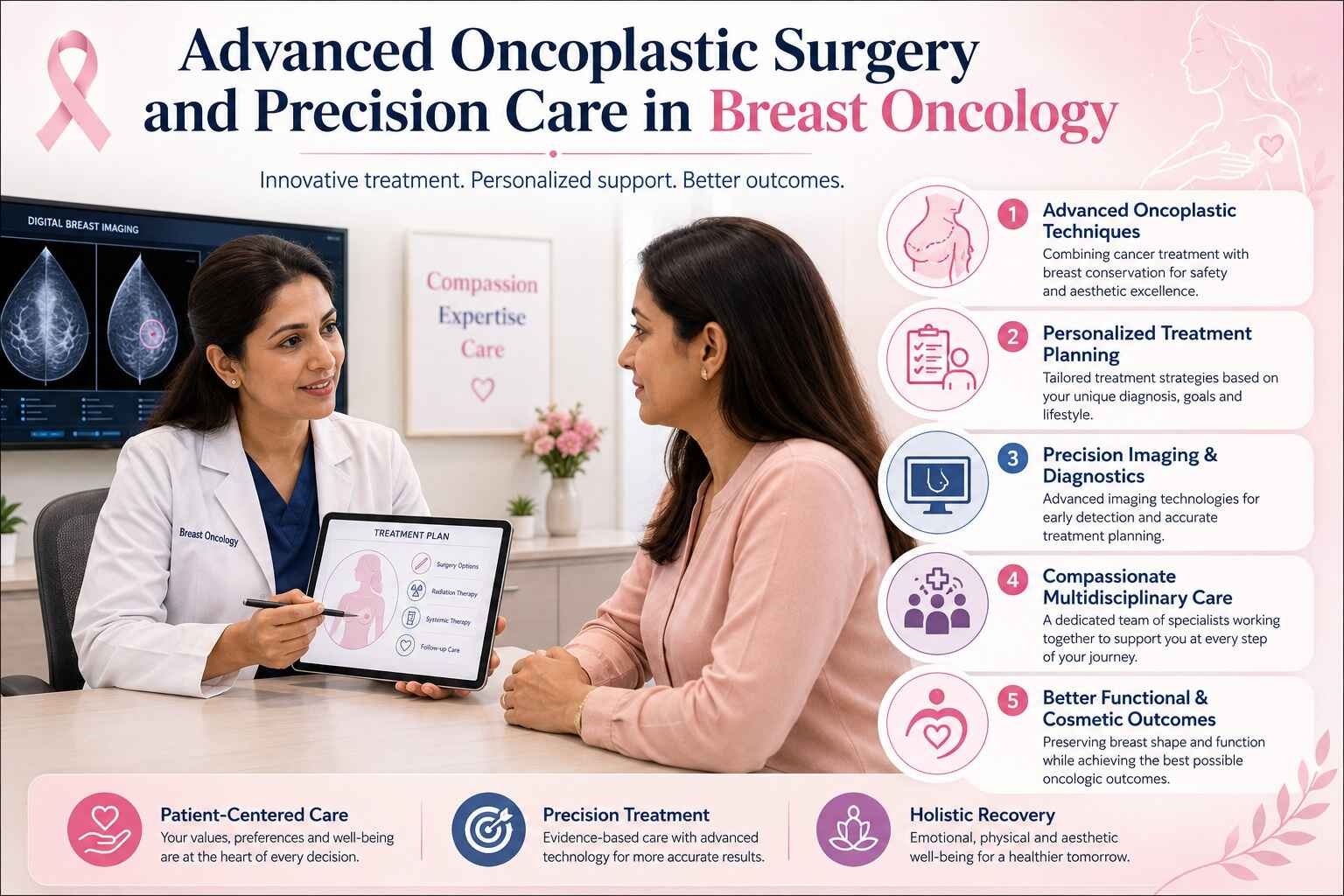
Over the past two decades, breast cancer care has undergone a profound paradigm shift. Historically, surgical intervention focused almost exclusively on radical tissue removal, which often resulted in significant physical changes and extended recovery periods. Today, treatment strategies blend advanced oncological principles with reconstructive plastic surgery techniques, ensuring disease control while preserving physical integrity and overall quality of life.
Consulting an experienced Breast Cancer Surgeon plays a vital role in navigating this complex and rapidly evolving landscape of modern surgical oncology. This evolution is grounded in comprehensive diagnostic profiling, where advanced genomic testing, high-resolution magnetic resonance imaging, and molecular subtyping allow clinical teams to tailor surgical interventions to the unique biological footprint of each patient’s tumor.
Modern treatment strategies prioritize both complete oncological safety and aesthetic breast conservation, giving patients renewed confidence throughout their recovery journey.
The Rise of Oncoplastic Breast Surgery
Oncoplastic surgery combines the precise removal of cancerous tissue with immediate aesthetic reconstruction. By utilizing local tissue rearrangement or flap procedures during the primary operation, surgical specialists can prevent post-resection deformities and achieve natural contours.
- Breast Conserving Surgery: Choosing advanced Breast Cancer Surgery allows surgeons to remove the tumor along with a healthy margin of surrounding tissue instead of removing the entire breast, preserving the majority of the natural organ structure.
- Volume Displacement Techniques: Local tissue flaps are advanced into the excision cavity to fill structural gaps, ensuring symmetrical breast shape without requiring external implants.
- Hidden Scar Pathways: Surgical incisions are strategically placed along natural anatomical lines, such as the periareolar margin or inframammary fold, making post-surgical scars virtually imperceptible over time.
Minimally Invasive and Robotic Surgical Paradigms
Beyond conservative resection, technological advancements have introduced minimally invasive methodologies into complex oncological operations. Robotic assisted nipple sparing mastectomy and endoscopic tissue harvesting allow surgeons to operate through microscopic, concealed incisions.
The care pathway progresses smoothly from precision diagnostic mapping to targeted sentinel node biopsy, followed by minimally invasive resection and immediate reconstruction. These microsurgical approaches significantly reduce intraoperative tissue trauma, lower postoperative pain levels, and minimize the risk of wound complications or skin flap necrosis.
When comparing treatment options, traditional radical approaches often required large surgical incisions, extensive tissue resection, full axillary node clearing, and prolonged hospital stays. In contrast, modern oncoplastic methods rely on microscopic incisions, maximum preservation of natural skin envelopes, targeted node biopsies, and significantly faster recovery times.
Sentinel Lymph Node Biopsy and Axillary Management
Axillary management has seen equal refinement over recent years. In the past, complete removal of axillary lymph nodes was standard practice to check for metastatic spread, frequently leading to chronic arm swelling or lymphedema.
Modern surgical protocols utilize sentinel lymph node biopsy instead. By identifying and removing only the primary sentinel nodes that drain the tumor area, surgical teams accurately stage the disease while sparing healthy axillary structures. This targeted approach dramatically reduces the incidence of secondary lymphedema, protecting long-term mobility and comfort.
Integrating Surgery into Multidisciplinary Treatment Plans
Surgical care does not occur in isolation. Maximum therapeutic efficacy is achieved when surgical procedures are synchronized within a multidisciplinary framework comprising medical oncologists, radiation therapists, pathologists, and genetic counselors.
For instance, neoadjuvant therapy, which involves administering systemic chemotherapy or targeted biological agents before surgery, can shrink larger tumors. This approach converts cases that previously required full mastectomy into suitable candidates for breast-conserving oncoplastic procedures.
Conclusion
Modern surgical breast oncology has successfully bridged the gap between disease eradication and body preservation. Through oncoplastic design, sentinel node mapping, and minimally invasive techniques, patients receive highly targeted, effective treatments that protect both long-term health and personal confidence. Seeking care from dedicated specialists operating within multidisciplinary ecosystems remains the single most impactful step in achieving optimal clinical outcomes.
Frequently Asked Questions (FAQs)
Q1: What is the main difference between a lumpectomy and a mastectomy?
A lumpectomy removes only the tumor along with a rim of healthy surrounding tissue, whereas a mastectomy involves removing all breast tissue. Modern oncoplastic techniques allow many patients to safely choose breast conservation.
Q2: How does sentinel lymph node biopsy reduce the risk of lymphedema?
Sentinel lymph node biopsy removes only the first few lymph nodes most likely to contain cancer cells rather than clearing the entire armpit. Preserving healthy lymph channels significantly minimizes the risk of chronic arm swelling.
Q3: What is neoadjuvant therapy and how does it affect surgery?
Neoadjuvant therapy refers to systemic treatments given before surgery to shrink the tumor. Shrinking the tumor often enables surgeons to perform breast-conserving surgery instead of a full mastectomy.