



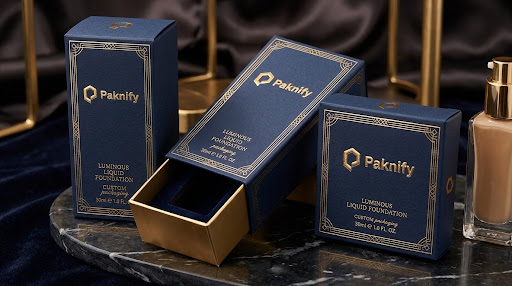
Foundation is a customer’s product of choice when it comes to trust. When customers open up their product, they look at the packaging first. They want to know if the packaging looks professional. They also want to make sure that the shade information is legible. Lastly, they want to make sure that the box can withstand being damaged while being delivered.
Well-Designed Foundation Boxes will help address the above-mentioned issues. Foundation boxes will protect fragile containers while displaying vital product information, as well as providing a uniform look for your cosmetics brand. Whether you are creating a new line of cosmetics or expanding your current operations, the appropriate packaging will provide you with both better presentation of products and better protection of those products.
Why Foundation Boxes Need Special Attention
Foundation bottles are typically packaged in glass containers equipped with either a pump or a dropper. If the packaging does not adequately protect these parts of the bottle, they may become damaged.
A well-designed box will keep your bottles from moving around unnecessarily, protect fragile parts, and provide ample room for ingredient information, shade names, and brand details.
Choosing the Right Foundation Box Style
Your packaging design will depend on the product you’re selling, how much money you have to spend on packaging, and what type of image you want to project with your brand. Some of the most common types of packaging include:
- Snap Lock Bottom Boxes: Provide a secure base for heavier foundation bottles.
- Tuck End Boxes: Offer affordable packaging that’s easy to assemble and store.
- Rigid Two-Piece Boxes: Create a premium presentation for luxury cosmetics.
- Magnetic closure boxes: Perfect for limited-edition collections and foundations.
- Sleeve Box: A combination of a protective inner tray and a visually appealing printed outer sleeve.
Getting the Right Size and Insert Design
The size of a typical bottle of foundation will usually contain about one ounce (30 milliliters). Cartons that are approximately 1.75 inches wide, 1.75 inches deep, and five inches tall are appropriate for some bottles; however, you should always measure your actual product prior to purchasing cartons.
Custom inserts can be used to hold your bottle securely during transit. Both paperboard collars and customized tray inserts will minimize the amount of motion of your product. Additionally, designing the proper space surrounding the pump head will eliminate unnecessary pressure on it.
Die-cut inserts are helpful for keeping each product organized within a foundation palette or multi-shade kit.
Choosing Materials for Custom Foundation Boxes
The selection of material will impact how good your packaging looks, how long it lasts, and what kind of print job can be produced.
Kraft and recycled paperboard provide two good alternatives for brands that wish to use simpler, more environmentally friendly packaging. However, when you use brown kraft material to print accurate shades of color, it is likely that you will need to apply a layer of white ink prior to printing the colors.
Printing and Finishing Options
Customers who are looking at luxury foundation box packaging will frequently evaluate the various options available to them prior to making their final purchase decision. This is why having clearly provided product information and accurate color representations is so important.
Use Pantone colors or an approved CMYK color profile to provide a shade swatch. Have the printer create a physical proof of the design prior to printing the final order. Label each shade with its name, number, and undertone clearly on the product packaging so consumers can easily find the correct product.
You can also improve presentation with:
- Matte lamination for a smooth, modern appearance.
- Spot UV to highlight logos and selected graphics.
- Foil stamping for metallic brand details.
- Embossing for raised logos and textures.
- Pearlescent finishes for glow-focused cosmetic collections.
- Choose finishes that complement your design rather than overcrowding it.
Tamper Evidence and Cosmetic Labeling
Confidence that the customer’s foundation is genuine and has not been opened is what customers want. To demonstrate that a foundation product is authentic, there are several methods available to support this claim, including using tamper-evident seals, holographic stickers, QR codes, and/or unique batch numbers.
Your packaging should contain all the relevant information about your product, such as the ingredients, the total volume of the product, shade details, batch identification number, and the contact information for either the manufacturer or the distributor. In addition to these details, you may need to include the SPF and/or Period After Opening (PAO) details if applicable.
Before you finalize your product packaging design, check with the regulatory authority in your country of choice to determine the specific labeling requirements for cosmetics.
Packaging for Retail and E-commerce
Retail packaging needs to make the product simple for consumers to recognize. Product name, color/shade, graphic design, and brand consistency can all assist consumers in comparing various foundations.
Custom small mailer boxes may also be a good option for shipping individual foundation products and/or multi-shade sets. To help ensure that online orders arrive safely, combine your retail carton(s) with an appropriately sized outer box to minimize product movement during transit.
Making Foundation Packaging More Sustainable
If your brand is committed to sustainability, you may want to use recyclable paperboard, kraft paper products, vegetable-based inks, and a minimum amount of coating on your packaging.
When you can use paperboard as a replacement for plastic parts and other materials, then don’t use the plastic parts or materials. Ensure that any environmental claims that you make about the products you produce accurately represent the types of materials that were used in the production process and the recycling possibilities in the area where they will be sold.
Final Thoughts on Foundation Boxes
The right Foundation Box will protect fragile bottles, show the color of the product being sold, and improve how well your company’s image is displayed. Whether you choose a simple tuck-end carton or a high-quality rigid box, every part of the package counts.
With premium foundation box packaging, your cosmetic company can package its products with a professional look while protecting the contents and providing a unified brand image.
Frequently Asked Questions
What material is best for foundation boxes?
SBS (solid bleached sulfate) paperboard is the standard of choice when designing daily-use cosmetic cartons. Conversely, rigid chipboard is an excellent alternative for high-end product lines.
Can foundation boxes include custom inserts?
Yes, there are two types of packaging that can be used to keep your products safe when they’re shipped. Paperboard collars can hold bottles in place, and die-cut trays can keep products from moving too much during transit.
What printing options are suitable for foundation packaging?
Both CMYK and Pantone printing processes are commonly used. In addition, there are many options available for enhancing the look of a printed piece, including matte lamination, foil stamping, embossing, and spot UV.
How do custom foundation boxes help beauty brands?
They provide protection for products, present key details about the products, and establish uniformity in packaging to assist consumers in identifying your company.