



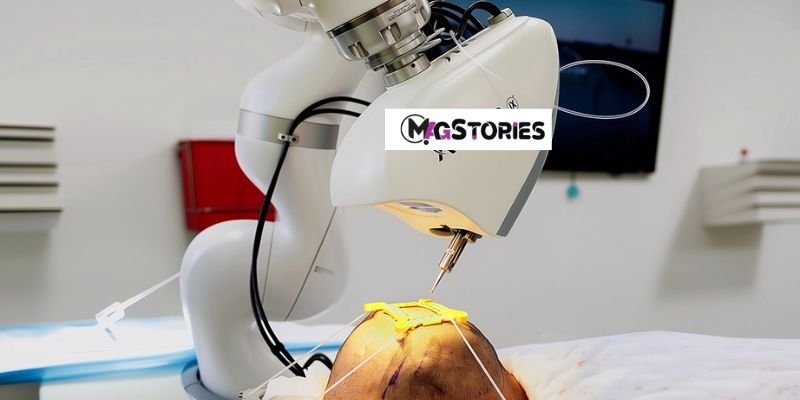
Hair transplantation has come a long way from the visible “plugs” of decades past, and one of the biggest drivers of that progress is the rise of robotic technology. Robotic hair transplants combine artificial intelligence, machine-vision guidance, and precision robotics with the surgeon’s expertise to make follicle extraction and placement more consistent than ever before. For patients researching hair restoration options, understanding how this technology works, and where it fits alongside traditional techniques, can make it much easier to choose the right path forward, especially when deciding between Hair Transplant options and finding a qualified Hair Transplant Surgeon to perform the procedure.
What Is a Robotic Hair Transplant?
A robotic hair transplant is a form of Follicular Unit Extraction (FUE), a technique in which individual hair follicles are removed one by one from a donor area, usually the back or sides of the scalp, and relocated to thinning or balding areas. What sets the robotic version apart is how the follicles are harvested. Instead of relying solely on a hand-held punch tool, the surgeon uses a machine-vision-guided robotic arm, such as the widely used ARTAS system, to assist with extraction. High-resolution imaging maps the scalp in detail, identifying individual follicles, their angle, and their growth direction, allowing the robotic arm to target each one with a level of precision that’s difficult to replicate by hand alone. Because it’s a form of FUE, robotic transplantation also avoids the linear donor scar associated with older strip-harvesting (FUT) techniques.
How the Technology Works
The process begins with detailed scalp imaging, which the system’s software uses to build a digital map of the donor area, identifying the healthiest follicles based on density, hair thickness, and growth angle. The robotic arm then extracts individual follicular units with micrometer-level accuracy, guided in real time by the imaging system to avoid damaging surrounding hair. This same technology can also assist with recipient site creation, determining the ideal spacing, angle, and density for each new follicle so that the result blends naturally with existing hair. Importantly, the robot doesn’t replace the surgeon; it acts as a highly precise tool under the surgeon’s supervision. The physician still makes the key decisions about hairline design, density distribution, and overall aesthetic planning, while the robotic system handles the repetitive, detail-intensive work of extraction with speed and consistency that can help reduce fatigue-related errors during long procedures. This balance of technology and human expertise is exactly why choosing an experienced Hair Transplant Surgeon matters just as much as the type of Hair Transplant technology being used.
Benefits of Robotic Hair Transplants
One of the main advantages of robotic hair transplantation is precision. Because the system uses advanced imaging and algorithm-guided movement, it can consistently target follicles with minimal damage to surrounding tissue, which supports stronger graft survival rates. Speed is another benefit robotic systems can extract large numbers of grafts more quickly and with more consistent depth and angle than manual extraction alone, which can reduce the total time a follicle spends outside the body, a factor known to affect graft health. The technology also reduces the physical fatigue a surgeon can experience during lengthy manual procedures, helping maintain a high level of accuracy from the first graft to the last. In addition, because robotic extraction avoids the need for a large strip incision, patients typically experience less scarring and a quicker, more comfortable recovery.
What to Expect During the Procedure
A robotic hair transplant typically begins with a consultation and scalp analysis, during which the surgical team evaluates hair density, donor area quality, and the patient’s desired outcome. On the day of the procedure, the donor area is trimmed and prepared, and local anesthesia is used to numb the scalp. The robotic system then scans the area and begins extracting follicular units according to the surgeon’s plan, a process that can take several hours depending on the number of grafts needed. Once extraction is complete, the surgeon oversees the creation of recipient sites and the careful placement of each graft to achieve a natural-looking result. Most robotic hair transplant procedures are performed on an outpatient basis, meaning patients can go home the same day.
Recovery and Results
Recovery from a robotic hair transplant is generally similar to that of standard FUE procedures. Mild swelling, redness, and scabbing in both the donor and recipient areas are common for the first week or two, and most patients can return to normal daily activities within a few days, though strenuous exercise is usually avoided for a couple of weeks. Transplanted hairs often shed within the first few weeks after the procedure, which is a normal part of the process, before new growth gradually begins several months later. Final results typically take shape over eight to twelve months, as the transplanted follicles establish a new growth cycle.
Is a Robotic Hair Transplant Right for You?
Robotic hair transplants tend to work especially well for patients with straight hair and a well-defined, healthy donor area, since these characteristics make it easier for the imaging system to identify and extract follicles accurately. That said, robotic assistance isn’t necessarily “better” than traditional manual FUE or FUT for every patient; it’s best understood as an advanced tool that enhances precision and consistency rather than a wholesale replacement for surgical skill. The experience and aesthetic judgment of the surgeon performing the procedure remain just as important as the technology itself, since hairline design and natural-looking density distribution still require a trained eye. Anyone considering this option should have a thorough consultation to determine whether they’re a good candidate and to understand realistic expectations for their specific case.
Final Thoughts
Robotic hair transplantation represents a meaningful step forward in hair restoration, blending advanced imaging and robotics with the artistry of an experienced surgeon to deliver more precise, natural-looking results with less scarring and downtime. As the technology continues to evolve, it’s likely to become an even more common part of modern hair restoration. For anyone exploring their options, the best next step is a detailed consultation with a qualified provider who can assess your hair loss pattern, donor area, and goals to recommend the most suitable approach.
Written by
MagStories Editorial Team
UK News, Celebrity, Technology, Sport & Lifestyle
View all articles by the team →